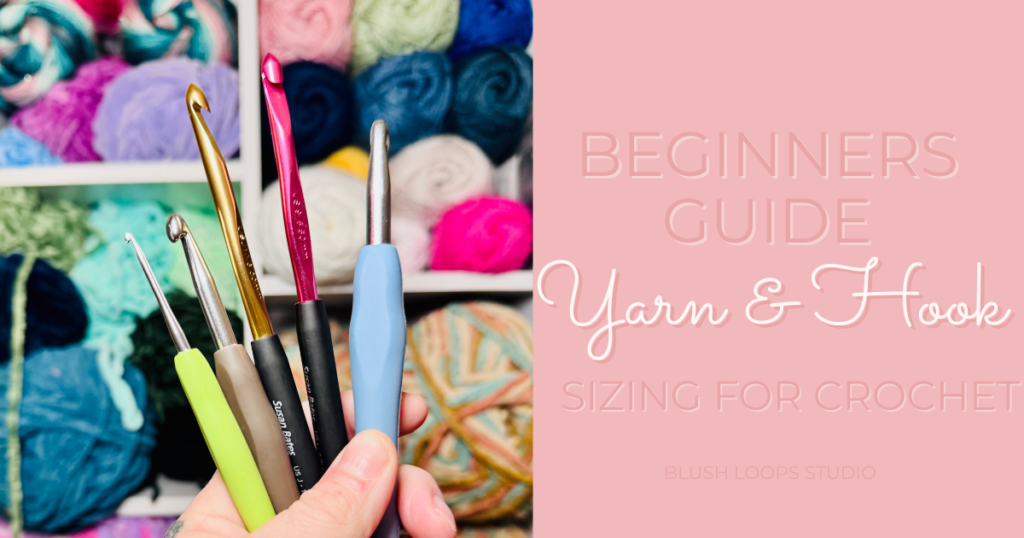
Have you ever walked into a craft store, filled with excitement to start your very first crochet project, only to freeze in the yarn aisle?
You aren’t alone. It happens to the best of us! You see walls of gorgeous colors and textures, but then you look at the labels. There are numbers, tiny symbols of skeins, and confusing terms like “DK,” “Worsted,” or “Roving.” Then you look at the crochet hooks, ranging from microscopic to gigantic.
Suddenly, you’re asking yourself: “How do I know which hook goes with which yarn? Does it really matter? Help!”
Welcome to Yarn School! Don’t worry, there won’t be a pop quiz.
As a beginner crocheter, understanding crochet yarn weights—the standardized system for how thick a yarn strand is—is the single most important step to ensuring your project turns out the size and shape you want it to be. This may not be as critical with blankets, but when it’s top priority for things like clothing and hats. Trust me… my first ever crochet top that was supposed to be flowy and gorgeous, ended up looking like a messed up afghan because I used a medium weight yarn instead of a light weight.
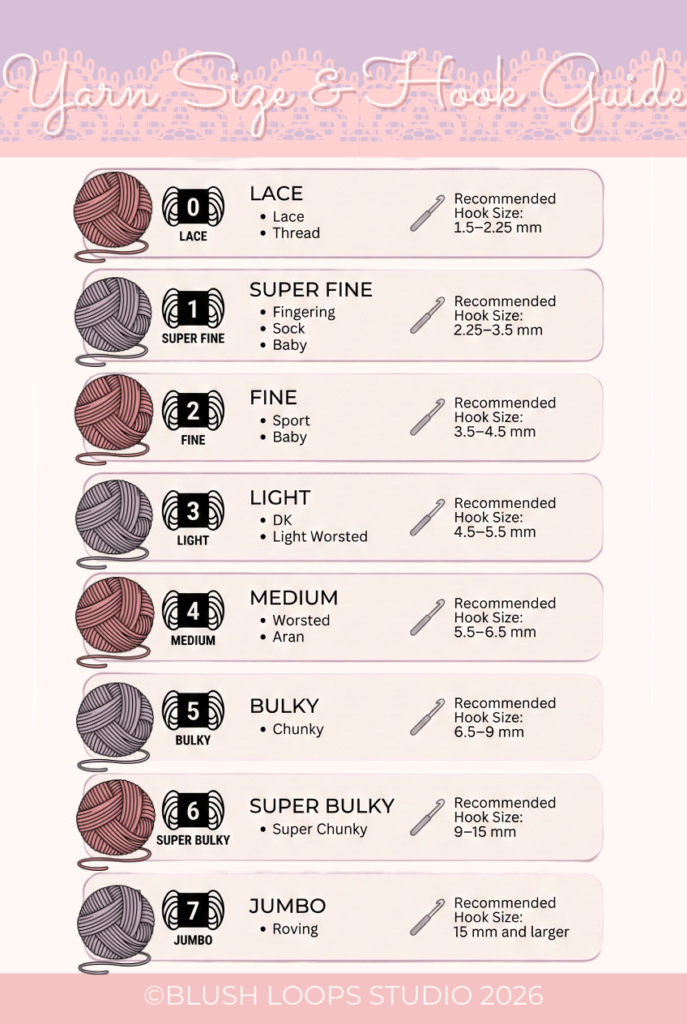
Today, we are breaking down the standard crochet yarn weight system (from 0 to 7), matching them up with their recommended hook sizes, and exploring what types of projects are best for each. We’ve even created a handy, pin-able infographic below to serve as your cheat sheet!
Why Yarn Weight Matters
Before we dive into the numbers, why does this matter? Can’t you just grab a pretty blue yarn and a random hook from your starter kit?
Well, yes, you could. But the results might be frustrating.
If you use a thin yarn with a giant hook, your fabric will be incredibly loose, holey, and lack structure. If you use a thick, chunky yarn with a tiny hook, your fabric will be stiff as a board, and you’ll find it incredibly difficult to pull the yarn through the loops.
Matching the right yarn weight to the appropriate hook size is the secret sauce to creating crochet fabric that has nice drape, even stitches, and looks professional.
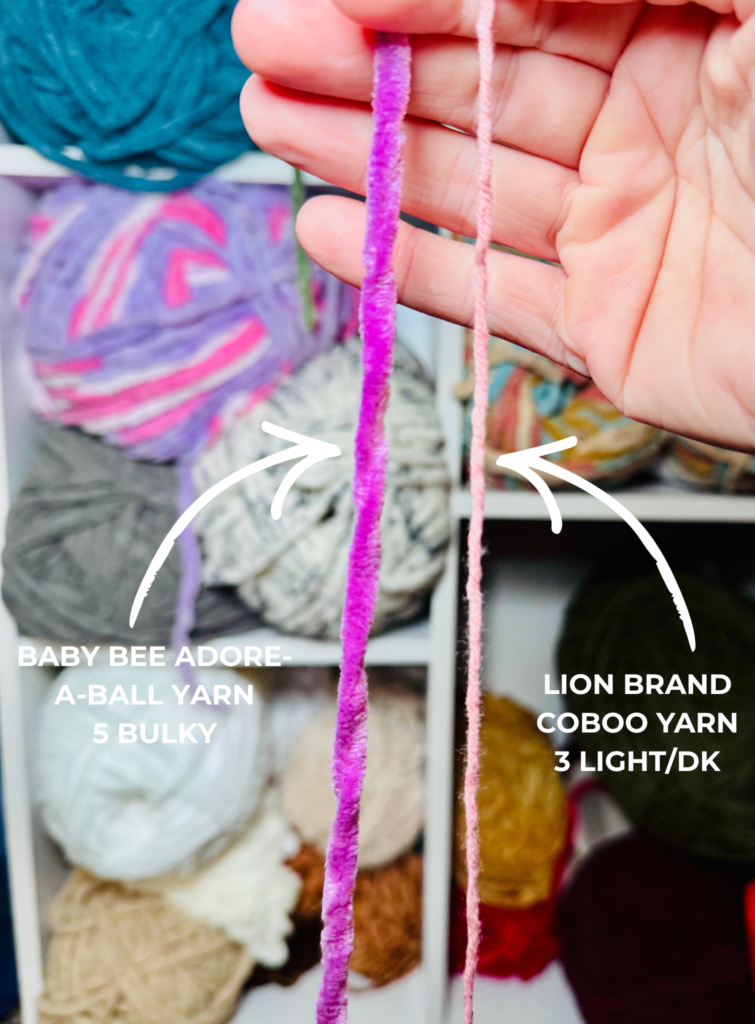
The Standard Crochet Yarn Weights System (0–7)
Thanks to the Craft Yarn Council (CYC), we have a standardized system to help us categorize yarn based on thickness. Most major yarn brands include these helpful little numbered symbols right on the yarn label band.
Let’s walk through the system, using our infographic above as a guide, moving from the thinnest threads to the thickest roving.
The Delicate Weights: 0 (Lace) to 2 (Fine)
These yarns are thin, lightweight, and often used for intricate projects requiring patience and a gentle hand. They generally aren’t recommended for your very first crochet project because the small stitches can be hard to see.
0 – Lace Weight
- Also known as: Thread, Cobweb.
- Recommended Hook Size: 1.5–2.25 mm (often steel hooks).
- Best Projects: This is extremely fine yarn used for delicate doilies, intricate lace shawls, and decorative edging on handkerchiefs. It takes a long time to work up!
1 – Super Fine Weight
- Also known as: Fingering, Sock yarn, Baby yarn.
- Recommended Hook Size: 2.25–3.5 mm.
- Best Projects: As the name suggests, this is the go-to for crocheting socks! It’s also wonderful for lightweight baby garments, airy summer shawls, and projects with detailed stitch definitions.
2 – Fine Weight
- Also known as: Sport weight, Baby.
- Recommended Hook Size: 3.5–4.5 mm.
- Best Projects: Slightly thicker than sock yarn, Sport weight is fantastic for light sweaters, baby blankets that aren’t too heavy, and accessories like wraps.
The Everyday Favorites: 3 (Light) and 4 (Medium)
If you are a beginner looking for your first yarn, look no further than categories 3 and 4. These are the “Goldilocks” yarns—not too thin, not too thick. They are easy to handle and allow you to see your stitches clearly as you learn.
3 – Light Weight
- Also known as: DK (Double Knitting), Light Worsted.
- Recommended Hook Size: 4.5–5.5 mm (Usually a G or H hook).
- Best Projects: DK is incredible versatile. It’s perfect for garments because it’s warm without being overly bulky. Use it for sweaters, cardigans, lighter hats, and amigurumi (stuffed toys).
4 – Medium Weight (The Beginner’s Best Friend!)
- Also known as: Worsted, Aran, Afghan yarn.
- Recommended Hook Size: 5.5–6.5 mm (Usually an I or J hook).
- Best Projects: This is the most popular weight for a reason. Worsted weight is the standard for afghans (blankets), winter hats, scarves, mittens, and sturdy home decor items like pillows. If you are buying your first skein today, grab a #4 Worsted Weight acrylic or wool blend and a 5.5mm or 6.0mm hook.
The Quick & Cozy Crochet Yarn Weights: 5 (Bulky) to 7 (Jumbo)
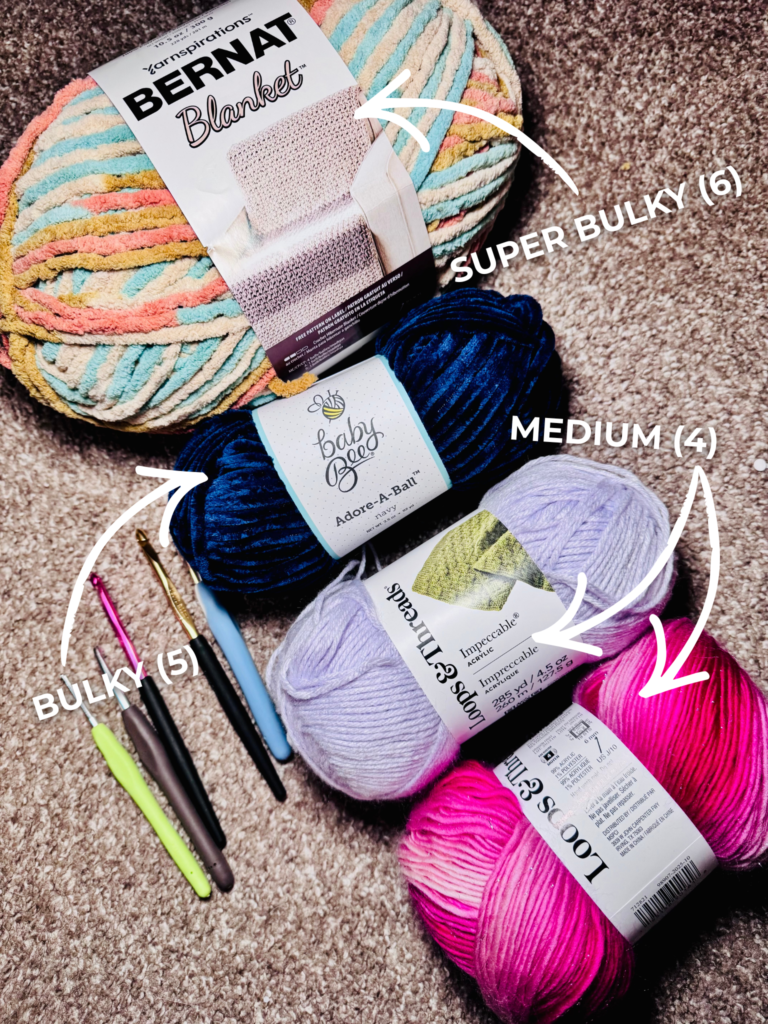
Want instant gratification? These crochet yarn weights work up fast because they are thick, meaning you need fewer stitches to cover more ground. They are fantastic for last-minute gifts.
5 – Bulky Weight
- Also known as: Chunky, Craft, Rug yarn.
- Recommended Hook Size: 6.5–9 mm (K hook and up).
- Best Projects: Great for super-warm winter accessories like chunky cowls and thick beanies. Also excellent for quick lap blankets and rugs. This is the the yarn you typically see in amigurumi patterns.
6 – Super Bulky Weight
- Also known as: Super Chunky.
- Recommended Hook Size: 9–15 mm (Large hooks like N/P).
- Best Projects: Cozy is the keyword here. Think oversized sweaters that feel like a hug, heavy throws, and baskets. You can whip up a scarf in just a few hours with this weight.
7 – Jumbo Weight
- Also known as: Roving, Ultra.
- Recommended Hook Size: 15 mm and larger (Giant hooks!).
- Best Projects: This crochet yarn weights category is for the massive yarns used in extreme knitting/crochet. It’s used for massive arm-knitted style blankets, oversized poufs for floor seating, and dramatic, artistic wall hangings.
Get a Head Start on Your Crochet Journey with Our Free Beginner Guide
If you are just starting out and feeling confused, it’s okay. It’s even normal. This guide is designed to take the stress and frustration out of of the early stages of your crochet journey.
Subscribe to get FREE Patterns, guides, and crochet tips sent directly to your inbox. And don’t worry, we hate spam too. We won’t do that to you.
Understanding Gauge (and Why the Label is Just a Suggestion)
While our infographic lists the recommended hook sizes, these are not hard-and-fast rules. They are starting points.
Every crocheter is unique. Some of us hold the yarn tightly (tight tension), creating small, stiff stitches. Others hold it loosely (loose tension), creating airy, floppy stitches.
This brings us to “Gauge.” Gauge is simply a measure of how many stitches and rows fit into a specific measurement (usually a 4×4 inch square) using a specific yarn and hook.
How to adjust for beginners:
When you buy yarn, look at the label where it shows the crochet yarn weights size. It usually suggests a hook size (e.g., 5.5mm). Try that first. Crochet a small sample square (a “swatch”).
- If your fabric feels too stiff and it’s hard to insert your hook, your tension is tight. Try moving UP one hook size (e.g., from a 5.5mm to a 6.0mm).
- If your fabric is too loose and you can poke your fingers through the holes easily, your tension is loose. Try moving DOWN one hook size (e.g., from a 5.5mm to a 5.0mm).
Don’t be afraid to experiment until the fabric feels right to you!
Want to Save this Post to Come Back to Later?
Hover over the image on your left and save this blog post to your crochet Pinterest Board. While you’re there, be sure to follow us on Pinterest!
3 Common Yarn Mistakes Beginners Make
To save you some frustration, here are three common pitfalls to avoid on your first trip to the yarn store:
1. Choosing based on texture instead of weight. That fuzzy, furry novelty yarn looks amazing on the shelf, but it is a nightmare for beginners. It is almost impossible to see where your hook should go next. Stick to crochet yarn weights that are smooth, plied yarns (like standard acrylic or wool blends) until you master the basic stitches.
2. Picking dark colors. Black, navy blue, or dark charcoal yarns hide stitches. When you are just learning to “read” your crochet fabric, use lighter, bright colors so you can clearly see the loops.
3. Ignoring the pattern recommendations. If you find a pattern for a hat that calls for “Super Bulky (#6)” yarn, but you try to make it with “Sport (#2)” yarn, you will end up with a hat sized for a doll, not a human! Always try to match the yarn weight the pattern calls for.
Ready to Start?
Understanding crochet yarn weights unlocks a whole new world of creative possibilities. Instead of being confused by the labels, you can now read them like a pro and choose the perfect materials for the project you’re dreaming of.
Be sure to pin the infographic above to your Crochet Pinterest board so you always have this handy chart when you’re shopping online or at the store. Happy stitching!